

I thought it would be useful, as well as interesting, to discuss late 19th Century and early 20th Century classical music written for dance/ballet.
Satie: Parade
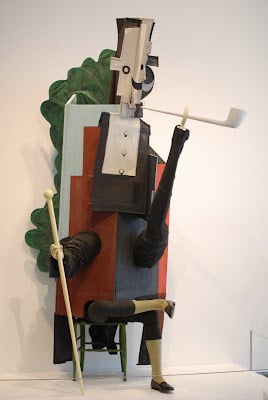
"Parade" is a ballet with music by Erik Satie and a one-act scenario by Jean Cocteau.
The ballet was composed 1916–1917 for Sergei Diaghilev's Ballets Russes. The ballet premiered on Friday, May 18, 1917 at the Théâtre du Châtelet in Paris, with costumes and sets designed by Pablo Picasso, choreography by Léonide Massine (who danced), and the orchestra conducted by Ernest Ansermet.
This movement " Ragtime" also known as Rag-Time du Paquebot (Ragtime of the Packet Steamer/Steampacket) would later be adapted for piano solo, and attained considerable success as a separate piano piece.
Satie: Parade - Rag-Time du Paquebot - wind dectet
I have also arranged most of the other movements for wind dectet and "weird" percussion!
Debussy: Prélude à l'après-midi d'un faune
Prélude à l'après-midi d'un faune (L. 86), known in English as Prelude to the Afternoon of a Faun, is a symphonic poem for orchestra by Claude Debussy, approximately 10 minutes in duration. It was composed in 1894 and first performed in Paris on 22 December 1894, conducted by Gustave Doret.
The flute solo was played by Georges Barrère.
The composition was inspired by the poem L'après-midi d'un faune by Stéphane Mallarmé. It is one of Debussy's most famous works and is considered a turning point in the history of Western art music as well as a masterpiece of Impressionist composition. Pierre Boulez considered the score to be the beginning of modern music, observing that "the flute of the faun brought new breath to the art of music."
Debussy's work later provided the basis for the ballet Afternoon of a Faun choreographed by Vaslav Nijinsky and a later version by Jerome Robbins.
Debussy: Prélude à l'après-midi d'un faune - wind dectet
Gabriel Pierné: Impressions de Music-Hall
The Impressions de Music Hall suite comes towards the end of Pierné’s long and distinguished career - a composer and executant at the height of his powers. It demonstrates the composer’s catholic tastes and capitalizes on the breadth and fluency of his creative experience.
Although he was influenced by Satie, Chabrier, Milhaud, and Stravinsky in borrowing musical elements from popular entertainment such as parody, burlesque, music-hall, ragtime, jazz, circus, and Spanish influences, his music remains rooted in the mainstream French tradition inherited from his teachers, Thomas, Franck, Massenet, and Saint-Saens, making it a little more refined, perhaps, than that of his younger contemporaries.
That he loved to write for the ballet and held a special affection for the music-hall and other forms of popular entertainment is certain.
The present score, originally conceived as a piano suite in the summer of 1925, was transcribed for orchestra a year later. It was then performed as a ballet score (à la Americaine), and transcribed yet again in a version for violin and piano in collaboration with the eminent virtuoso Samuel Dushkin.
I have arranged the following mvts for wind dectet:
I. Chorus Girls (French Blues)
II. L'Excentrique (LittleTich) and wind quintet
Ravel: Ma Mère L'Oye (Mother Goose Suite)
Ravel originally wrote Ma Mère l'Oye as a piano duet for the Godebski children, Mimi and Jean, ages 6 and 7. Ravel dedicated this work for four hands to the children (just as he had dedicated an earlier work, Sonatine, to their parents). Jeanne Leleu and Geneviève Durony.
It bears the subtitle "cinq pièces enfantines" (five children's pieces).
- Pavane de la Belle au bois dormant: Lent (Pavane of Sleeping Beauty)
- Petit Poucet: Très modéré (Little Tom Thumb / Hop-o'-My-Thumb)
- Laideronnette, impératrice des pagodes: Mouvt de marche (Little Ugly Girl, Empress of the Pagodas)
- Les entretiens de la belle et de la bête: Mouvt de valse très modéré (Conversation of Beauty and the Beast)
- Le jardin féerique: Lent et grave (The Fairy Garden)
In 1911, Ravel orchestrated the five-piece suite.
Later the same year, he also expanded it into a ballet, separating the five initial pieces with four new interludes and adding two movements at the start, Prélude and Danse du rouet et scène. The ballet premiered on 29 January 1912 at the Théâtre des Arts in Paris.
I have arranged the orchestral suite for:
- wind quintet -all five movements
- wind dectet - four movements excluding mvt 3
Stravinsky - Pulcinella Suite
Pulcinella is a 21-section ballet by Igor Stravinsky with arias for soprano, tenor and bass vocal soloists, and two sung trios. It is based on the 18th-century play Quatre Polichinelles semblables, or Four similar Pulcinellas, revolving around a stock character from commedia dell'arte.
The work premiered at the Paris Operaon 15 May 1920 under the baton of Ernest Ansermet.
The central dancer, Léonide Massine, created both the libretto and the choreography, while Pablo Picasso designed the costumes and sets.
The ballet was commissioned by Sergei Diaghilev, impresario of the Ballets Russes.
A complete performance takes 35–40 minutes. Stravinsky revised the score in 1965.
Pulcinella Suite
Stravinsky extracted a purely instrumental suite from his ballet which was premiered by the Boston Symphony Orchestra, conducted by Pierre Monteux, on 22 December 1922. It has these eight movements:
- Sinfonia
- Serenata
- Scherzino – Allegretto – Andantino
- Tarantella
- Toccata
- Gavotta (con due variazioni)
- Vivo (Duetto prior to revision)
- Minuetto – Finale
The suite was revised in 1947 to correct printing errors, change metronome markings and rename part VII.
I have arranged the suite for wind dectet.
As the music is still within copyright as of 20 Aug 2025 this arrangement of the score is available here for FREE, for study purposes, as an example of my orchestration